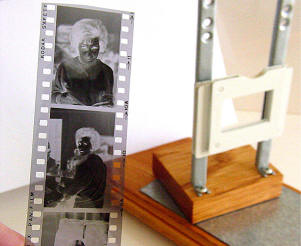
You should be able to hold the negative
above a white reflective background and see a lot of sharp detail in the
negative. The more detail you see the better photograph will result.
If it's under exposed you will see a lot of light areas with no detail.
If it's over exposed you will see a lot of areas with no detail.
The ideal negative is a negative where you can see a lot of detail.
Step Two -
Negative Orientation
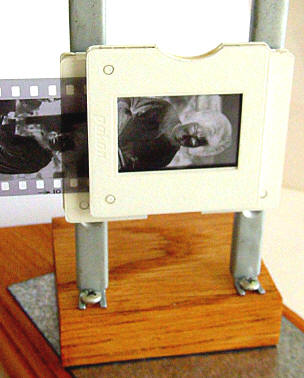
Insert the negative
into the "ShotCopy Slide Negative Holder" so the duller side faces the
camera. This insures that the negative is in the same orientation
as it was taken.
Step Three -
Changing a Negative to a Positive
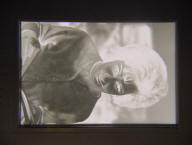
A lot of today's
digital cameras have the ability to change a negative to a positive
when shooting which some call "Neg Art". You can also shoot the negative as a negative and use
your PC's photo editing software to convert it to a positive. You
might want to experiment to see which gives you the best results. This
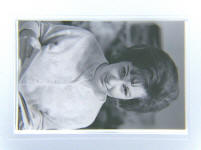
image was converted by an old "Sony Mavica Digital Camera" since the "Neg
Art" feature was built into the camera and gave the best results.
Step Four -
Rotate, Crop and Cleanup
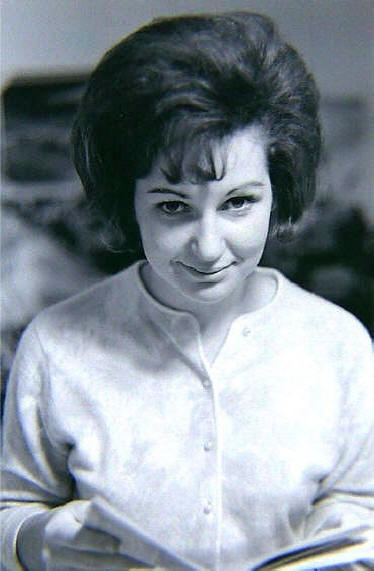
With your photo
editing software rotate the image (in this case) to the portrait
position. Use your software features to adjust and balance brightness
and contrast; remove dust spots; and crop picture as desired. Then
save it for posterity as a digital image. No more fading or yellowing
pictures. Now you can save and send it to friends and family. Or
how about a compellation of your photos as duplicatable CD or DVD disk
photo album? Way Cool.
Most photo editing
software does a good job converting b/w negatives to positives; while
color negatives can cause a lot of pain and suffering if you don't use
or more full featured photo editing software package. Corel Paint
Shop Pro happens to be one of them.

 Serving Satisfied Customers
Since 1997
Serving Satisfied Customers
Since 1997